
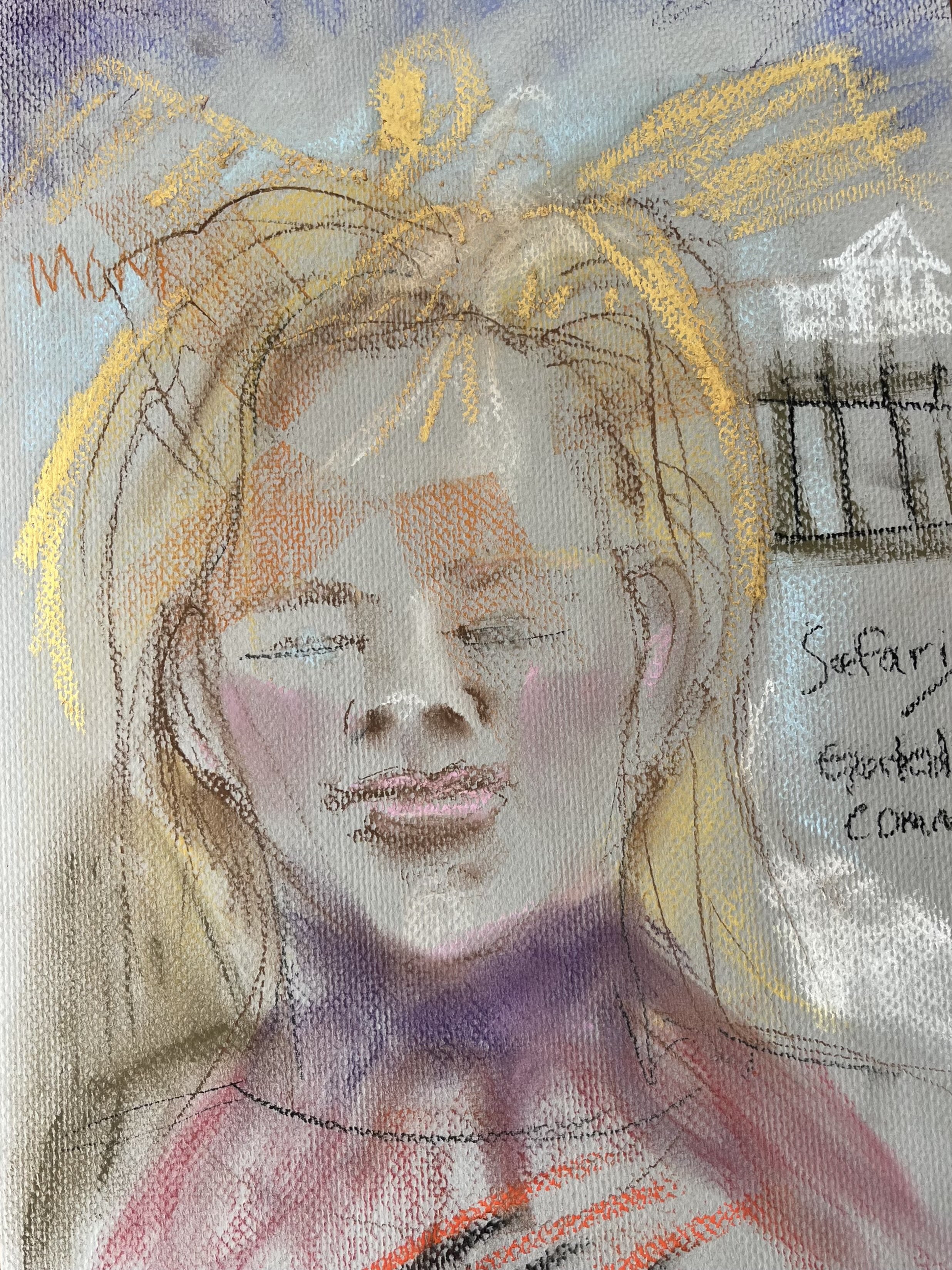
Why Sharon?
My work is shaped by lived experience, chaplaincy, education, and credentialed training.
Thinking Outside of the Box
My life has never fit neatly into categories—or stayed in one version of itself for very long. Over time, I’ve let go of the need to label things—or people—as simply “good” or “bad.” What I’ve found instead is something more honest, more complicated, and ultimately more freeing.
Since 1989, I have lived with Stargardt’s disease, a condition that gradually took my central vision. In 2018, I was diagnosed with Parkinson’s disease. Neither experience turned me into a saint, but both changed the way I move through the world. They made me less interested in perfection and more interested in what helps people actually feel alive, connected, honest, and human. They also gave me a very low tolerance for pretending.
I don’t believe healing means becoming endlessly positive or spiritually polished. I think it often looks more like:
learning how to stay present to your own life,
finding moments of unexpected lightness,
letting people help you,
laughing in the middle of hard things,
and discovering that meaning and joy are still possible even when life doesn’t go according to plan.
I don’t help people become perfect versions of themselves. I help create the kind of conversations and experiences where people stop gripping so tightly for a moment… and suddenly remember they are still in there.
Sometimes that happens through deep reflection. Sometimes through a surprising question. Sometimes through laughter that catches people off guard. Usually, it happens together.
Experience Matters
For 12 years, I served as a Palliative Care Chaplain in an acute care hospital. I supported people in moments where there were no easy answers—and no way around what was happening, working with individuals and families navigating:
serious illness
grief and loss
complex medical decisions
emotional and spiritual distress
In that work, I learned how to stay present in hard places without rushing to fix them. And I saw, again and again, how much can shift when someone feels genuinely seen. Beyond one-on-one care, I also:
led bereavement and support groups
facilitated team-building and staff resilience programs
created meaningful rituals for patients, families, and medical teams
taught workshops and lectures in hospitals, communities, and national settings
As co-chair of an advanced certification committee with the Association of Professional Chaplains, I helped shape standards for palliative care chaplaincy at a national level.
A Few Things About Me
I am legally blind and still regularly lose my phone while actively holding it.
I love deep conversations, but I’m also highly suspicious of anything that takes itself too seriously.
I believe laughter is one of the fastest ways people remember they are safe.
I have spent years sitting with grief, illness, uncertainty, and complicated family dynamics—and I still genuinely believe people are capable of surprising beauty.
I cry somewhat easily. I also laugh somewhat easily. Sometimes very close together.
Background & Training
Rev. Sharon Burniston, MDiv, BCC-PCHA
Former Palliative Care Chaplain (12 years)
Board Certified Chaplain
Advanced Certification in Palliative Care & Hospice Chaplaincy
Master of Divinity — Drew University
Certified in Thanatology
Certified Success Codex Reader
Ordained United Methodist Clergy
Workshop facilitator, speaker, group leader, and creator of experiences that help people feel more connected to themselves and each other.